Afin de participer au financement de la mise en oeuvre du projet, un campagne de collecte participative est ouverte sur Kengo.bzh
the metamorphs
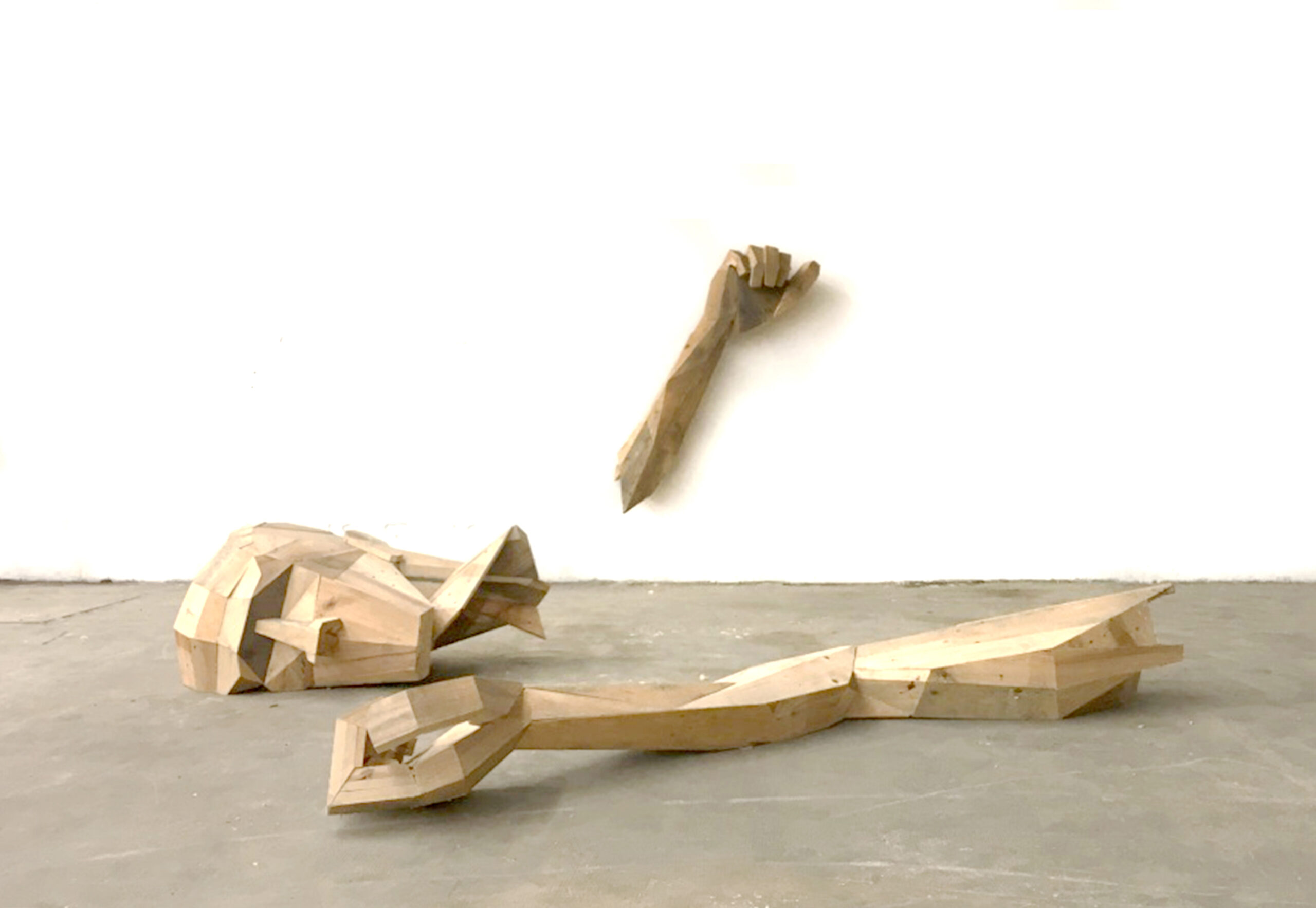
Les trois sculptures qui composent the metamorphs forment un ensemble de corps en transition. Elles interrogent l’instant où un corps quitte un état pour en embrasser un autre. La sculpture n’est pas un objet figé mais un prolongement : un espace d’altération, de construction et de mutation.
the proposal, the dance and tirésias proposent des corps relationnels, façonnés comme des «images obliques»1 déviantes, déséquilibrées mais affranchis. L’identité queer est posée comme une «identité désessentialisée et purement positionnelle»2 accueillant tous les corps invisibilisés, des personnes transgenres aux personnes amputées.
Ces œuvres convoquent à la fois les identités marginalisées et l’héritage des statues grecques : des figures qui rompent leurs entraves pour se mettre en mouvement et briser la “ligatio“, ce pouvoir paralysant qui opère dans toute image.3. Même fatigué·e, fracturé·e ou incomplet·e, se relever, s’étreindre et persister deviennent des mouvements de résistance et de présence.
Réalisée en bois de palettes, les oeuvres transforment le rebut en chair et font de la précarité une force symbolique. L’usage de matériaux de récupération engage une réflexion sur les cycles, les restes et les devenirs, à la croisée d’enjeux écologiques et politiques.
Le travail de facettes, de courbes et de torsions matérialise la performativité et la pluralité dans la matière elle-même, entre puissance, fragilité et déséquilibre. «Structuré comme une ossature mais d’aspect lisse et doux comme une enveloppe de peau, le bois de la sculpture synthétise l’impossible alliance des os et de la chair.» 4
La création se conçoit comme espace/temps évolutif : modules et éléments peuvent être activés, reconfigurés ou ajustés selon les lieux, à différentes échelles. Corps et sculpture deviennent des territoires vivants, traversés, instables et profondément humains.
"Now I am ready to explain how bodies have transformed into other bodies."
Ovide, Les Métamorphoses, 8 ap. J.-C.
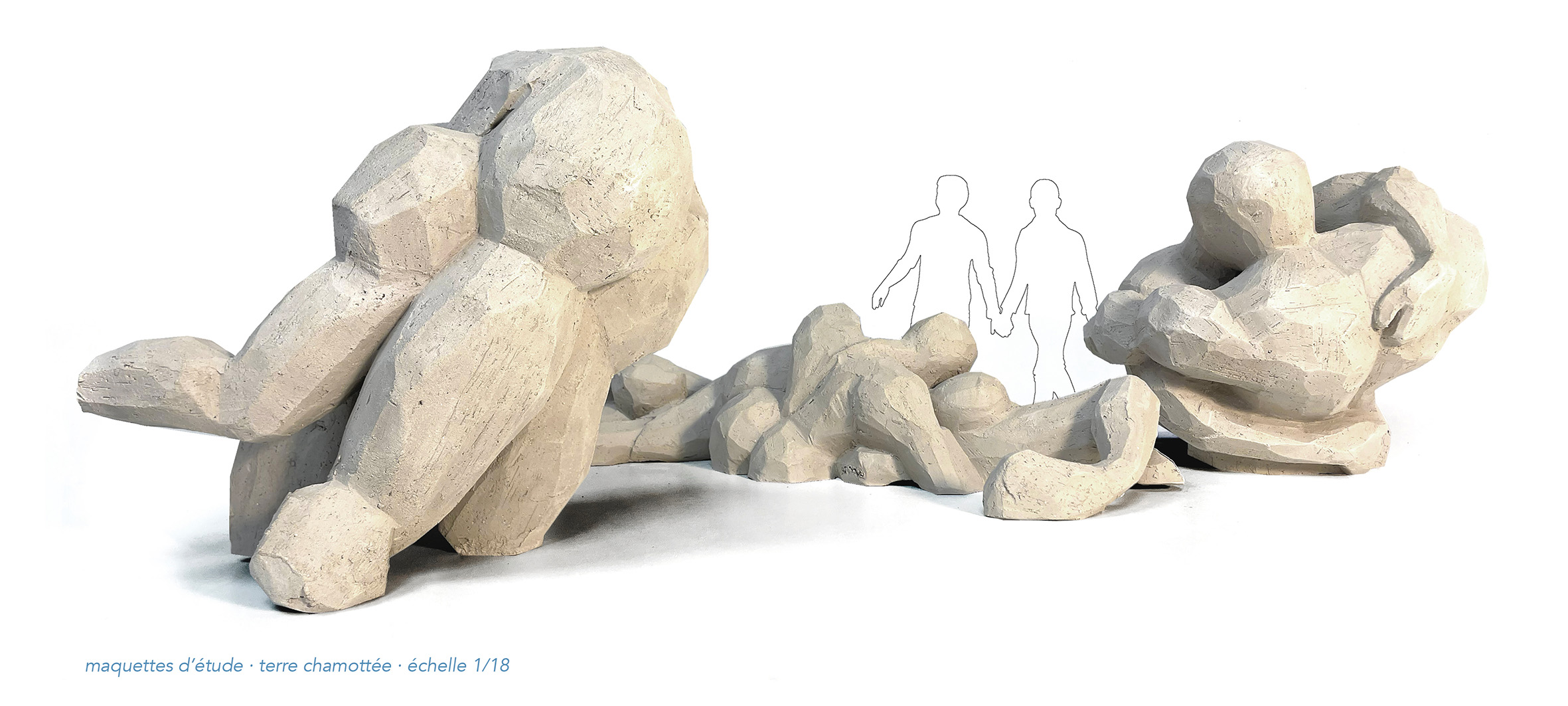
the dance
Metamorphosis appears as much as a vital necessity as an act of resistance: that of existing in a space, in the fluidity of our queer bodies and in their movements. Seeing bodies but not being sure that they are bodies and not knowing which bodies they are.
Dans the dance , fractures and imbalances are inscribed. In a precarious in-between – between three, between four? – a new body imposes itself, incomplete and yet born from repetition and number; like a process always in the process of being made, unmade and reinvented in order to resist.
Each perspective reveals a different interpretation, affirming that identity is never fixed but fluid and relative to the gaze and judgment we place upon it. Dance as a space for action and resistance, for embodying and bringing these identities into being.
As if drawn by an axis whose verticality wavers, an axis hidden from the world's view, the sexes converge and identities turn their backs on the society that rejects them. The points of support are not yet stable; they are broken, amputated. But together, collectively, the whole stands upright and attempts to extract itself. In any case, it rises. Drawn by a force whose power surpasses it, its separations and reconciliations dominate us. The idea we form traces invisible but shifting boundaries, relative to the gaze and judgment we cast upon them. Dance as a space of action and resistance, to embody and bring these boundaries into being.
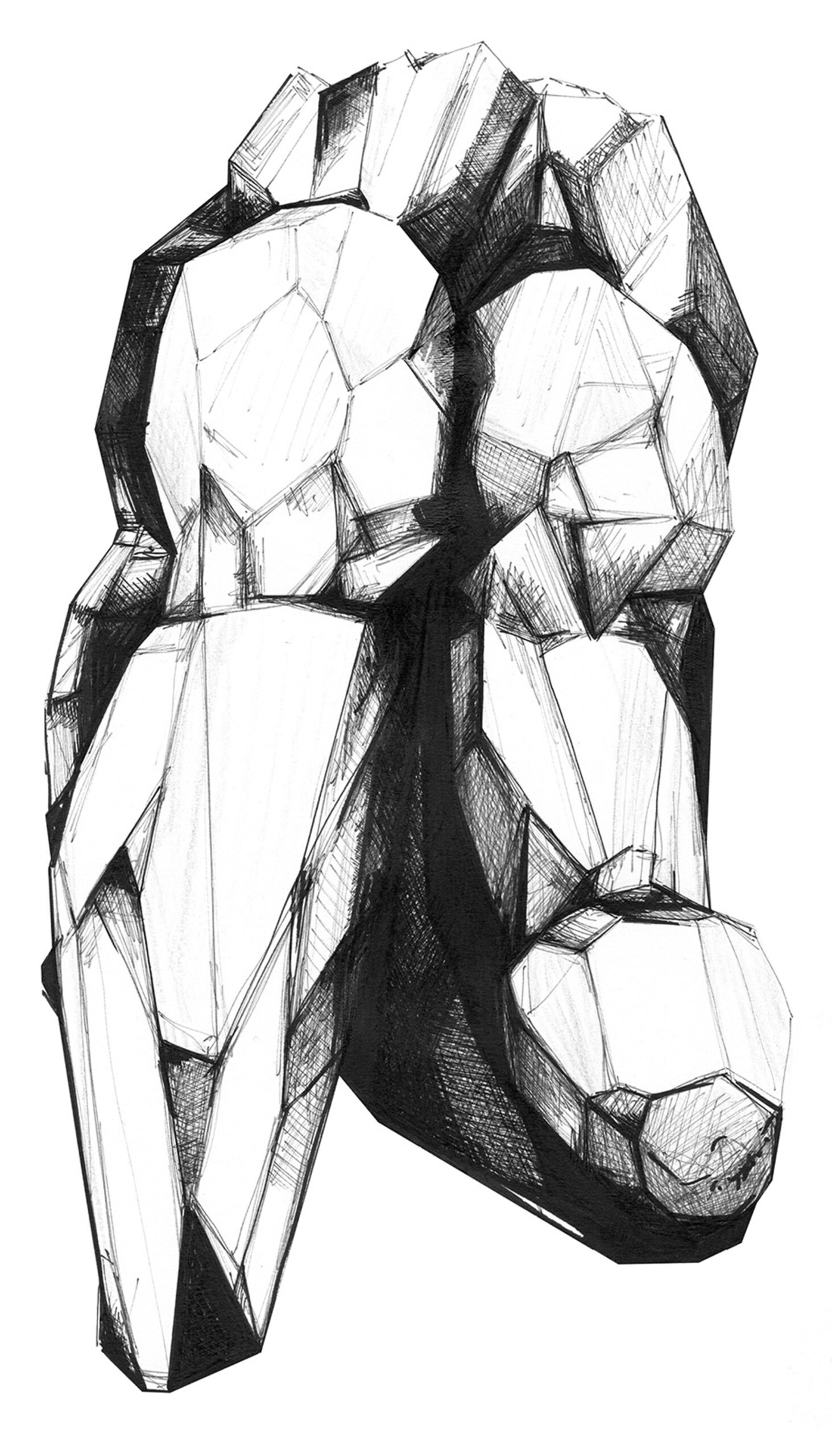
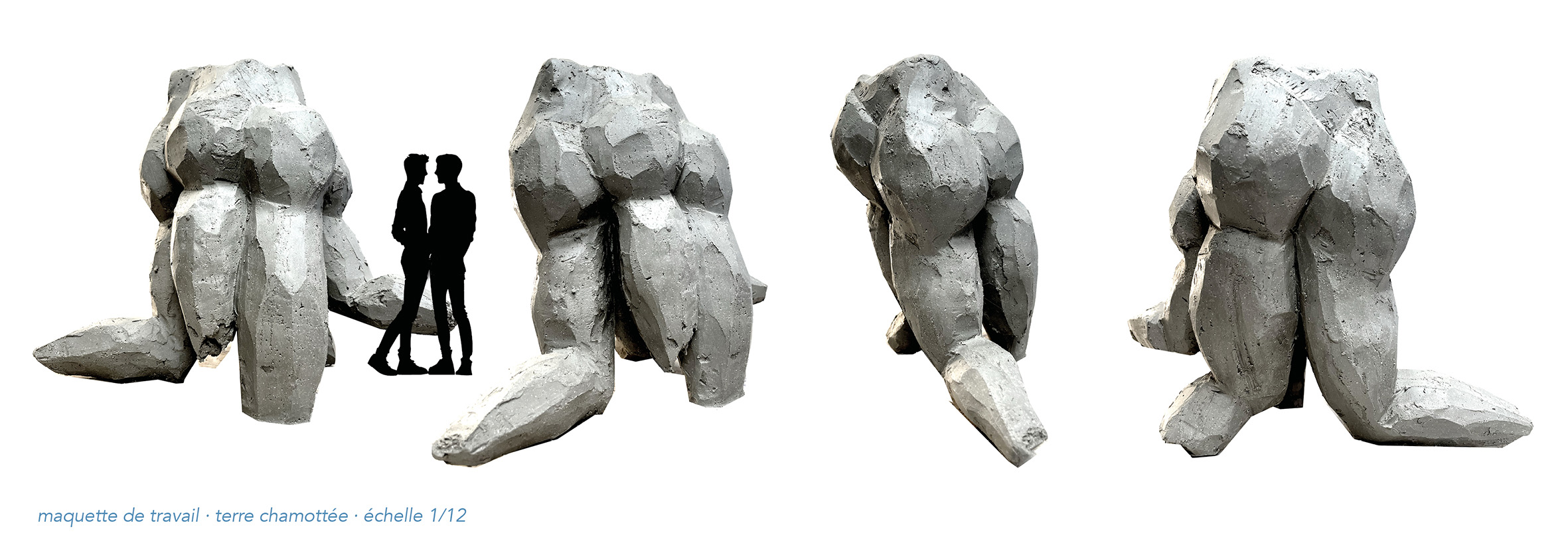
the proposal
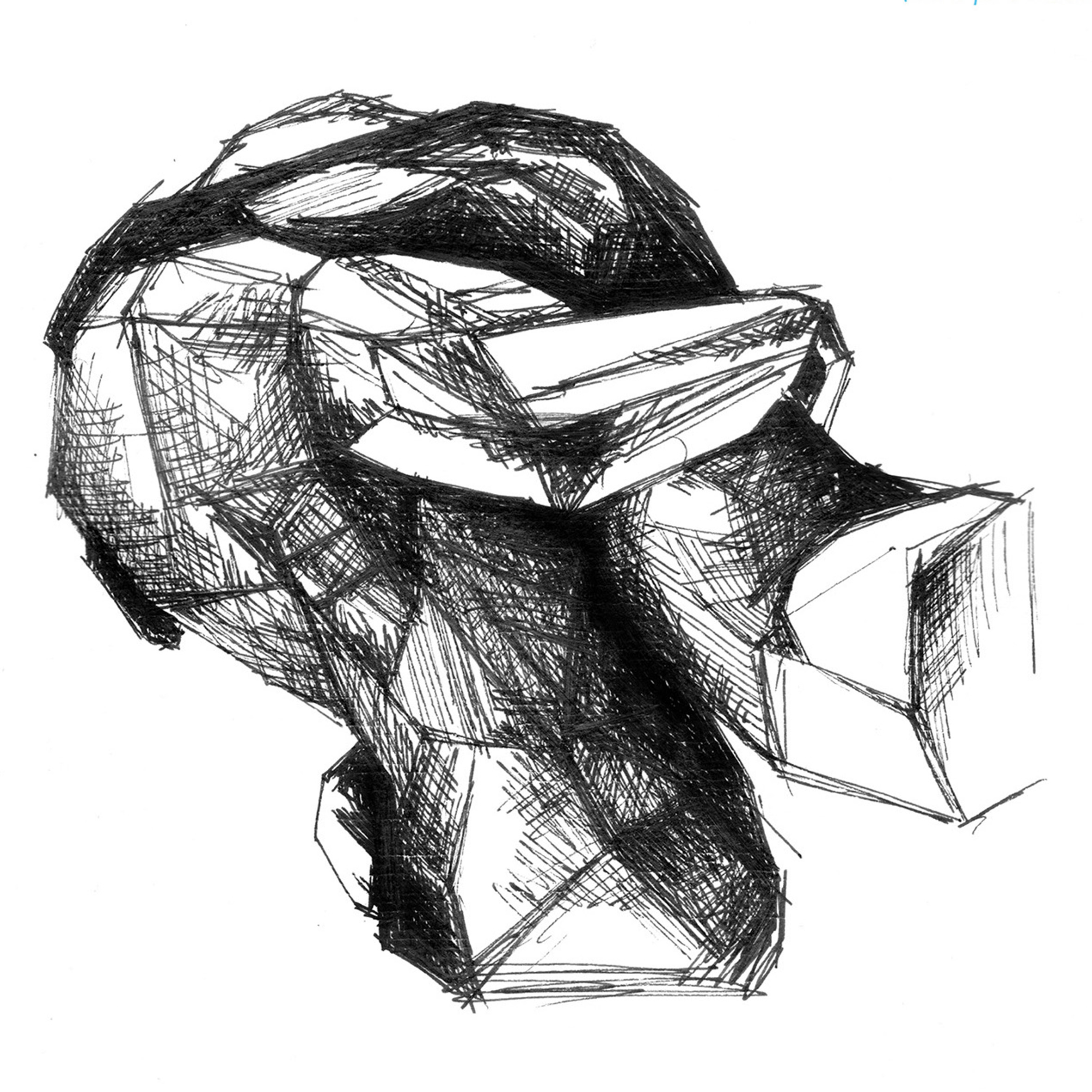
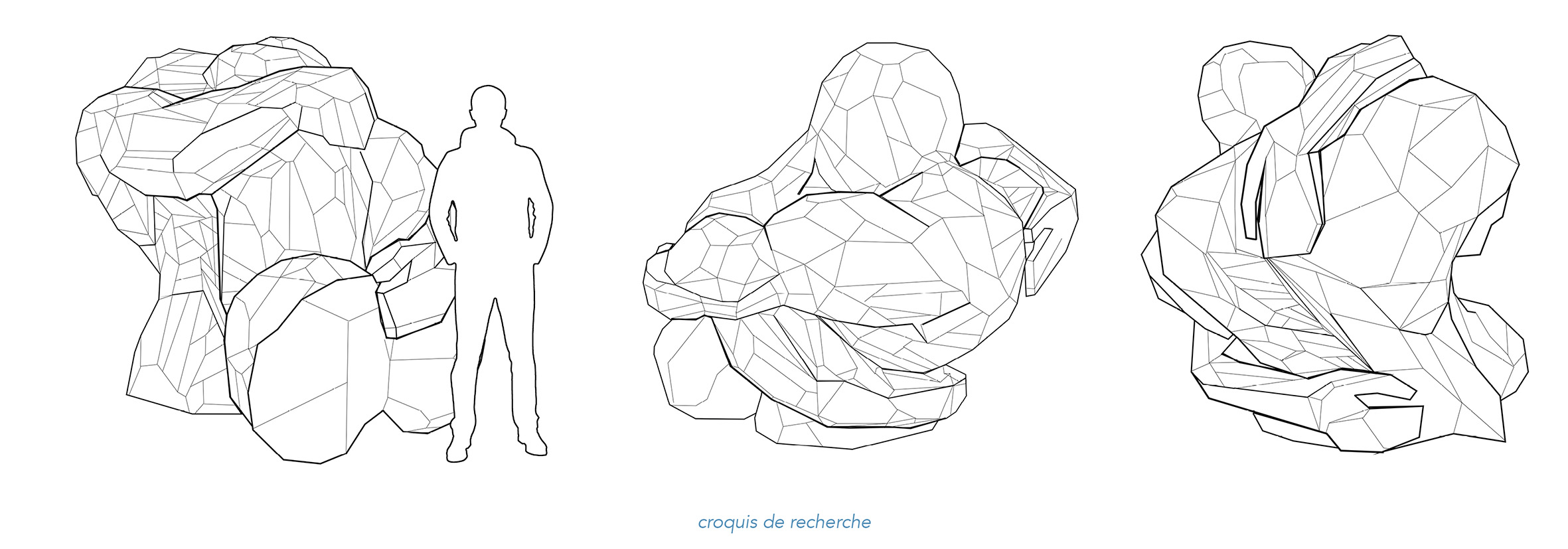
Perhaps they are two body parts, bound together and held in a single intention. It is a tight embrace made of volumes that are at once massive, unstable, organic, spherical, solid, and light. Two busts that evoke the hybridization of form, flesh, and thought.
Between birth, rallying and twinship emerges a form that refuses norms and definitive assignments: an entity in molt, activated from within.
Because I wanted to enter their body. Between fusion and extraction, in an almost globular way, the form created combines two forces in full morphological recomposition.
In this kiss that unites matter, both Brancusi and Superman inspire the movement. The embrace, the caress, and the strength evoke struggle as much as pleasure, love and mourning. It is about combining a "political message and a poetic aesthetic," about questioning masculinity through the power of tenderness.
It is not out of lightness that they seem to rise up and dance: they are protecting themselves from the outside world. They do not look at us, but their presence infects the space like a legitimate, intimate, and collective demand to be respected.
tirésias
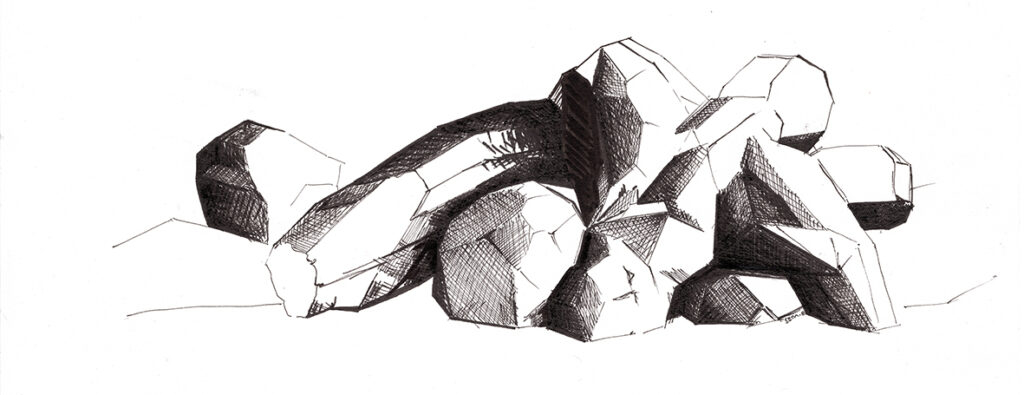
In Sophocles' time, Tiresias was the only mortal to have known "the sexual metamorphosis".
Against the dominant divine power, against the assignments, I propose the trans-serval and the sensible of another reality of bodies.
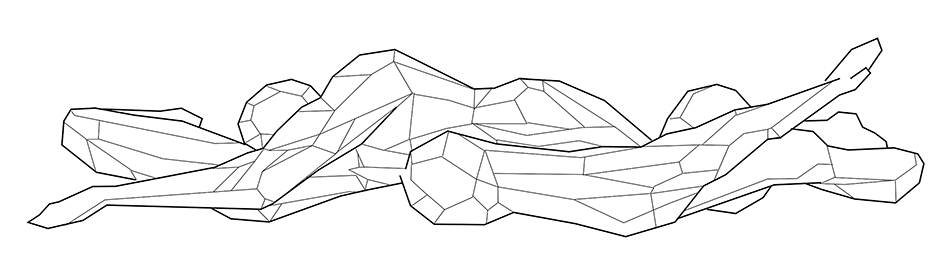
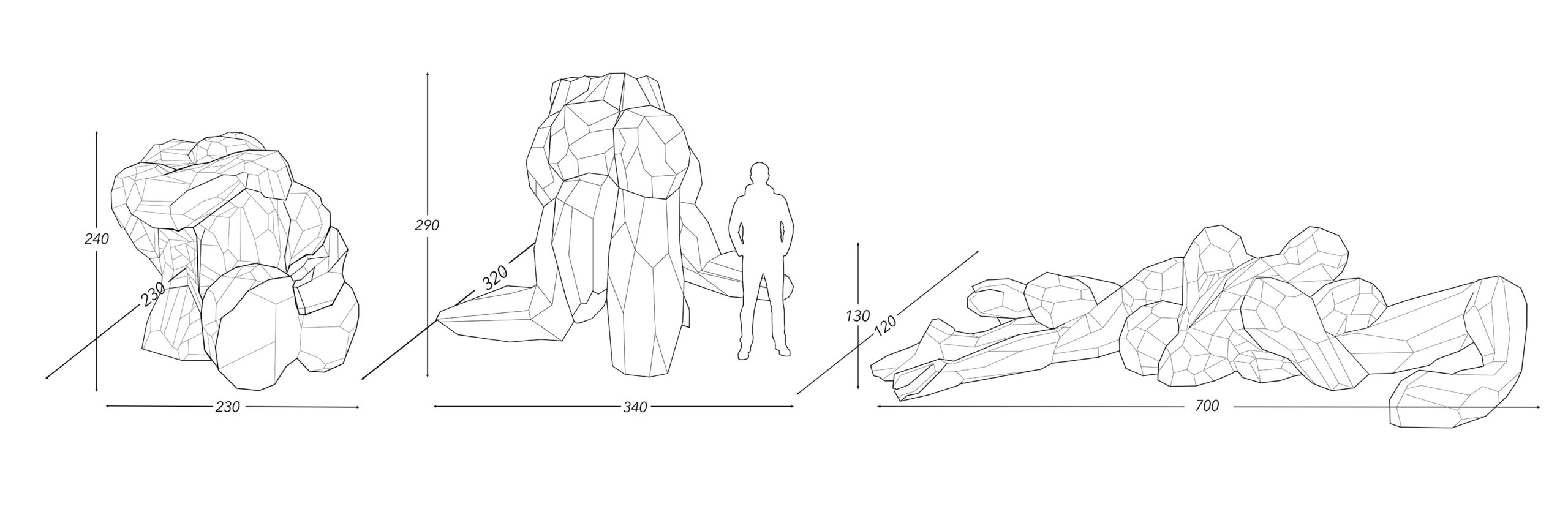
In a process of revising the notions of verticality and horizontality and their political symbolism, Baselitz's principle of reversal inspires rotation and reinforces the subject's desire for ambiguity and legibility. After being turned, the verticality is extended and becomes lascivious. Around this horizontality, coiling, clinging, interpenetrating, a form repeats and modifies itself. Above, below, limbs, genders, and bodies abstract themselves from formal constraints. The form embraces the ground, the earth, or extricates itself from it.
In the pose of an odalisque but not constrained, the form seems to reflect itself, like Narcissus, like a mirror that constantly reminds us what we are not.
The body is dysphoric but dreamt of. It becomes possible, possessed, personal, beyond norms: prophetic.
épisode meta
La construction du corps queer passe souvent par la reconstruction. À l’image d’un corps fragmenté cherchant à se rassembler, son identité interroge : comment se construire en dehors des normes.
A la croisée de l’écologie et des pensées queer — telles que développées notamment par CY Lecerf Maulpoix — cette recherche envisage le corps comme un écosystème instable, traversé par des flux, des dépendances et des transformations.
Ce résidence fonctionne comme un laboratoire d’expérimentation de formes sculpturales et de représentation des corps. Les métamorphoses qui s’y déploient naissent de métissages et de confluences. Le projet de recherche a vocation à évoluer au file du temps et des rencontres humaines, ainsi qu’au contact des lieux de création. Cette résidence pourrait s’intituler épisode 1 meta.
Un travail de collaboration sera engagé avec des structures du champ médico-social, du handicap et du handisport. En allant à la rencontre d’autres personnes concernées*, il s’agira d’imaginer avec elles des prothèses hybrides, chimères de bois, exosquelettes autant qu’abattits ; sculptures de substitution, entre membres fantômes, presque archéologiques et réparations bancales.
Dans l’immobilité des objets se fixeront les mouvements humains et individuels.